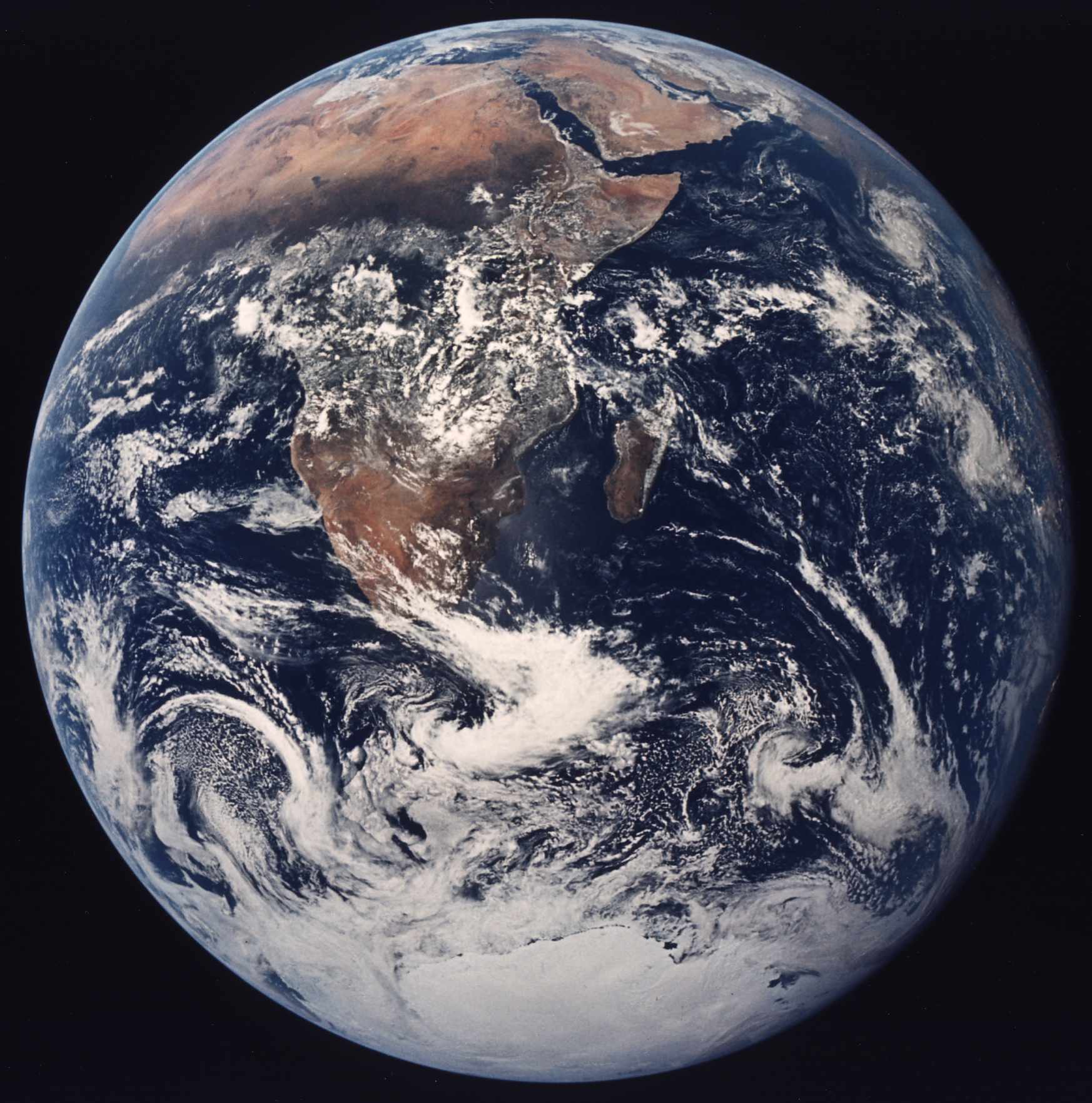
People around the world are celebrating the joys of mother earth- Today is April 22nd, Earth Day. As an environmental activist since the days I ran the recycling club in junior high, I realized early on just how my actions here in the U.S. had an affect on South Asia.We’ve talked here on Sepia Mutiny on the issues of shipbreaking on the coast of India, to the extinction of tigers. But the hottest environmental issue around the world right now (and the price at the gas pump only reenforces it) are the issues of energy and climate change.
 |
|
Happy Earth Day! |
The Earth’s climate has been changing slowly over the centuries. Cold periods have alternated with warm periods. However, these changes have been happening at a much faster and devastating rate in recent years. The 1980s and 1990s were the warmest decades on record.In the past, natural processes could handle the amounts of greenhouse gases generated, and the system remained in balance. In recent decades, however, human activity through increased use of fossil fuels and cutting down of forests has been overloading the natural processes. Greenhouse gases are now being generated by the burning of fossil fuels to run cars and factories and heat buildings, as well as by industrial processes.[link]
Bangladesh, being a delta, will have to deal with the rising sea level that will result in the changing in global temperature.
Experts say warmer global temperatures will increase the intensity of cyclones that form over the Bay of Bengal, sending more violent storm surges crashing into the coast. The saltwater front will crawl further inland, rendering farmland unusable and polluting much of the country’s drinking water. The Sundarbans National Forest, a wild swath of mangroves that plays an important role in the nation’s ecology, could be wiped out. Most alarmingly, as much as 18 percent of the land could slip into the bay in the next 100 years because of rising sea level, according to the World Bank, displacing as many as 30 million people. [link]
But finally, the U.S. realizes that environmental degradation is a transnational issue and will be supporting South Asia on developing clean energy technology.
“The energy sector is key to the economic growth of South Asia and the deployment of clean technologies can help balance economic development with environmental protection,” said George Deikun, mission director of the United States Agency for International Development (USAID) India.Deikun said USAID’s efforts to promote regional energy cooperation through its South Asia Regional Initiative/Energy (SARI/E) programme and its work in the energy sector in India and other countries of this region underscored this principle. [link]
I know what you’re thinking- that changing a small part of your life isn’t going to make that big of a difference to decreasing the changing climate. But even the smallest thing you do can have a huge impact on decreasing your ecological footprint (this site tells you just how big your footprint is). What difference can you make?


